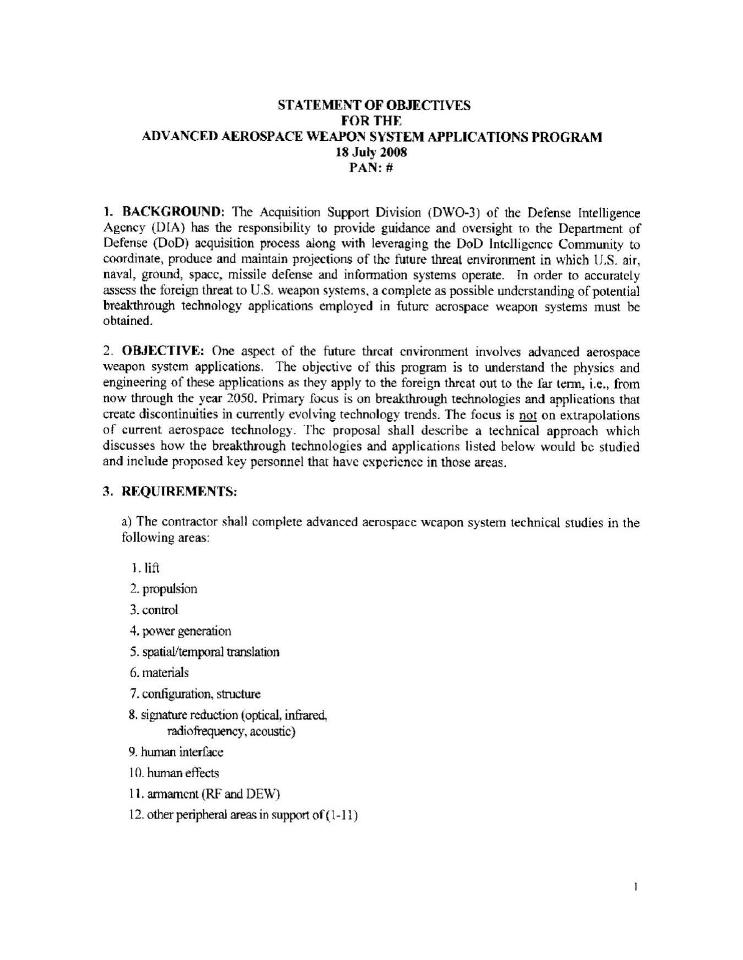
Forty-one records with unusually strong story structure
Release 5 arrived August 7, 2026 with 41 records: 22 PDFs, 16 videos, and three images. Its standout material formed natural clusters. A set of FBI interviews and digital renderings documented triangle reports across different years. Historical military papers revisited famous film and “ghost rocket” cases. A short chain of presidential, intelligence, and diplomatic records showed how officials tested a spectacular story from Brazil.
This was a good release for resisting visual pattern fever. Several people can use the word “triangle” without describing the same event, technology, or cause. A government-made rendering can faithfully illustrate a witness description while remaining an illustration. The release makes those distinctions visible if the files are read as a sequence rather than a slideshow.
The triangle packet is compelling because it is plural
The FBI records include accounts from 2002, 2011, 2023, and later interviews, with descriptions ranging from airborne lights to dark translucent forms and large shapes with red lights. Some files have accompanying witness-guided renderings. Their recurrence makes the reports worth comparing. It does not supply shared sensor data, a common location, or a demonstrated connection among cases.
The distinction matters because shape is often the least stable part of a distant observation. Lights can imply edges that no camera records. Perspective can turn separate points into a single imagined surface. None of that means the witnesses saw nothing; it means “triangle” is the beginning of analysis, not its conclusion.
Bahia shows verification working
The Bahia documents began with a sensational local report: a large metallic sphere, a crash, and a dead occupant in strange clothing. The National Aeronautics and Space Council asked the State Department to check. The U.S. Embassy then reported its understanding that a weather balloon had been seen in the area but that no crash had been verified. The paper trail is valuable precisely because the story became less dramatic as officials sought confirmation.
The 1953 film-analysis memorandum points in the other direction. Analysts found aspects of Montana and Utah footage inconsistent with ordinary explanations under their assumptions, while explicitly recording limitations and asking for better-resourced work. Release 5’s most honest theme was not belief or disbelief. It was how much the conclusion depends on what survived.
The ghost-rocket and Gulf of Oman materials broadened that theme across eras. Reports can begin with a compelling label and later fragment into different evidence problems: intelligence context, ambiguous motion, weak scale, or uncertain linkage among files. A memorable nickname is helpful for cataloging. It is not a substitute for reconstruction.
The Puerto Rico memorandum is the release’s sharpest historical anomaly
A U.S. Naval aviator reported a delta-shaped object about the size of a fighter and visually estimated speed above Mach 3. A Navy destroyer’s AN/SPS-49 radar reportedly produced a track assessed around 3,800 knots. CIA offices responsible for scientific intelligence and classified reconnaissance considered foreign collection activity and ruled out domestic aircraft such as the YF-12A OXCART as the source.
That combination—trained visual witness, contemporaneous naval radar, and internal deconfliction—makes the incident stronger than a single story. The public file is still a 1965 memorandum summarizing the underlying evidence. It does not release the radar photographs at usable resolution, the full tracking geometry, calibration, weather, or the pilot’s complete first-hand report. It preserves an extraordinary measured claim without giving modern analysts everything needed to verify the measurement.
The Gulf of Oman report is dramatic but explicitly unevaluated
An AC-130 crew reported roughly 25 instances of “cold orbs” during a 2021 training mission, including apparently aggressive motion and reactions to weapons activity. The standardized Intelligence Information Report is a serious collection document—but it is not finished intelligence. The record itself says descriptive and speed language reflects subjective interpretation, and the aircraft’s recorder was reportedly not working during the sightings.
The paired footage relates to the broader mission context but does not capture the central phenomena as described. This is exactly the kind of detail that gets lost in retellings. A report can be authentic, operational, and unresolved while the most dramatic performance estimates remain unmeasured.
Bahia and the triangle packet provide the controls
Bahia shows a spectacular claim weakening under follow-up. The triangle packet shows multiple witnesses and useful renderings while keeping testimony separate from imagery. Together they prevent Release 5 from becoming a highlight reel. Some government files preserve real anomalies; others preserve the process by which ordinary explanations or evidentiary ceilings become visible.
The 1953 film-analysis memorandum adds a historical example of analysts finding ordinary candidates insufficient under particular assumptions and asking for better work. A tentative technical concern is not a final extraordinary identification. It is a request for a better experiment.
Evidence verdict: the closest historical radar-visual claim, still one generation removed
The Puerto Rico incident reaches layer five in summarized form: a visual report, a reported naval radar track, and intelligence-office deconfliction are linked. It does not reach layer six because the raw radar and complete analytic package are not public. The Gulf of Oman case is strong operational testimony but sits lower because its central behavior was not recorded.
Release of the Gyatt radar plots, sensor settings, ship position, pilot statement, and analytic calculations would make Puerto Rico independently testable. For Oman, synchronized original sensor recordings and weapon-event logs would be decisive. Release 5 contains some of PURSUE’s most interesting claims, but its best evidence still arrives through summary layers.
Evidence on the page
What the released material actually shows
Open each source to inspect the complete record. The caption separates the useful fact from the limit that keeps it from carrying more weight.
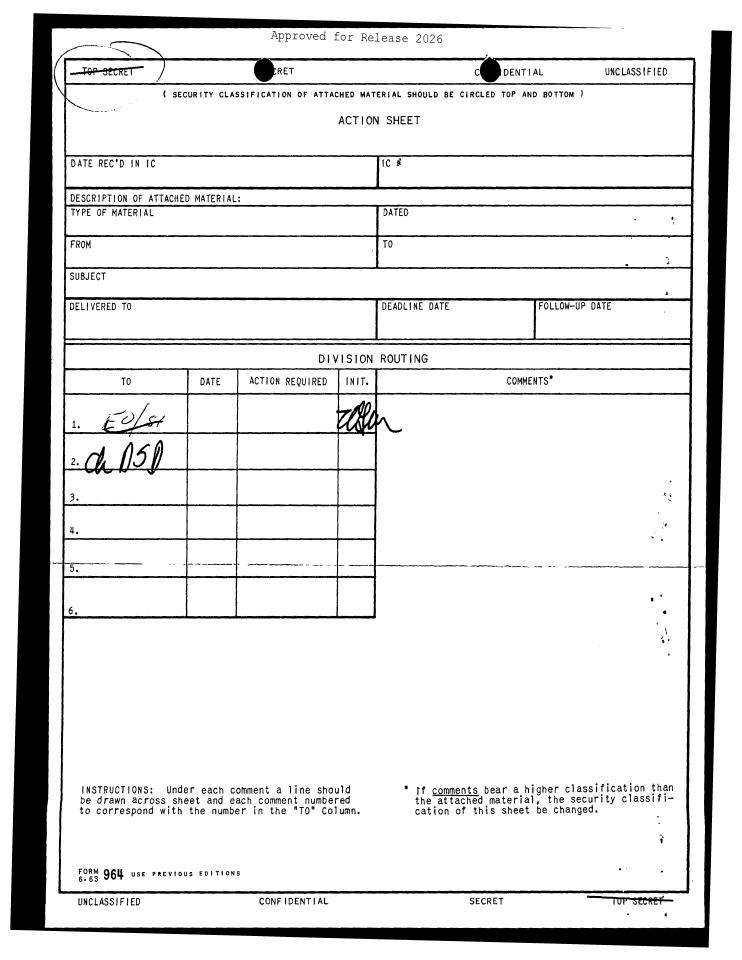
Puerto Rico radar-visual memorandum
What it shows: A naval aviator’s delta-shaped visual report is paired with a reported USS Gyatt radar track near 3,800 knots, and domestic experimental aircraft were considered and ruled out.
The limit: The public memorandum summarizes the underlying radar and pilot evidence without releasing a complete modern reconstruction package.
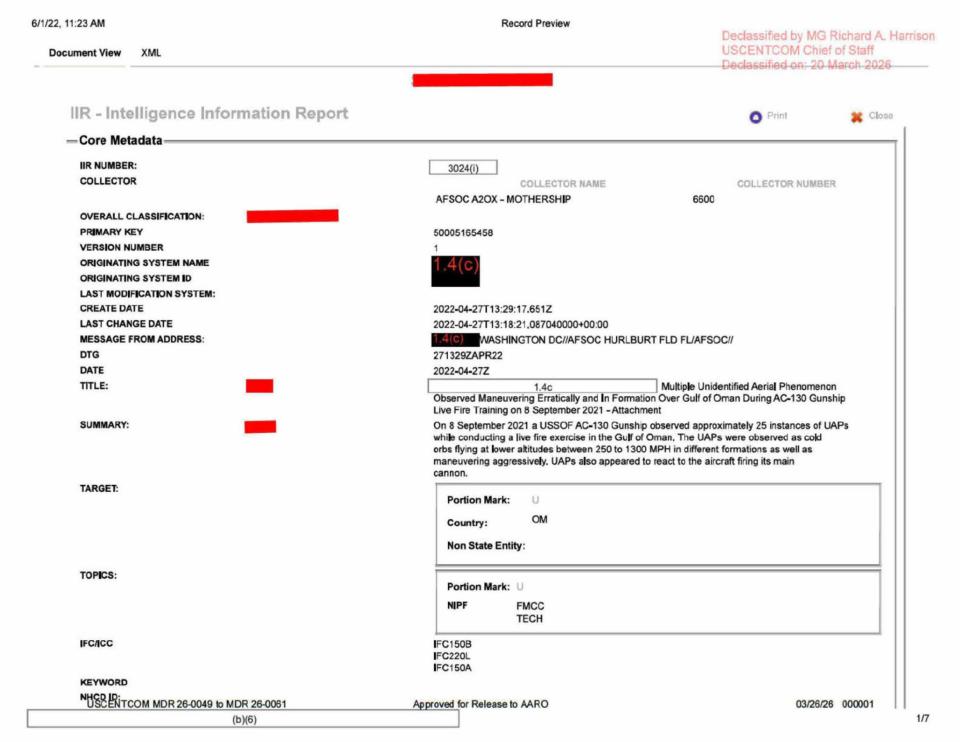
Gulf of Oman AC-130 report
What it shows: An operational intelligence report preserves crew descriptions of roughly 25 “cold orb” instances during a live-fire exercise.
The limit: The central phenomena were not recorded because the digital recorder was reportedly not working, and the speed estimates are subjective.
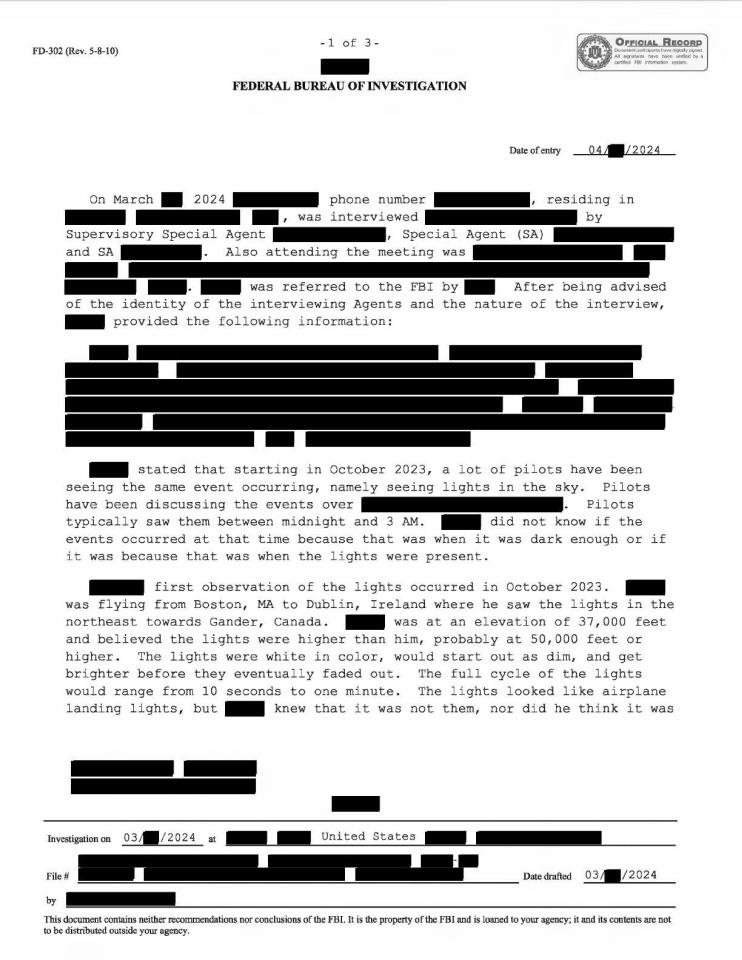
Triangle witness interview
What it shows: A formal FBI record preserves detailed testimony and links it to a witness-guided rendering.
The limit: The rendering visualizes memory and is not independent event imagery.
Historical film-analysis memorandum
What it shows: Analysts document why ordinary candidates did not fully satisfy their assumptions and call for better-resourced work.
The limit: A provisional anomaly in analysis is not a positive identification of extraordinary technology.
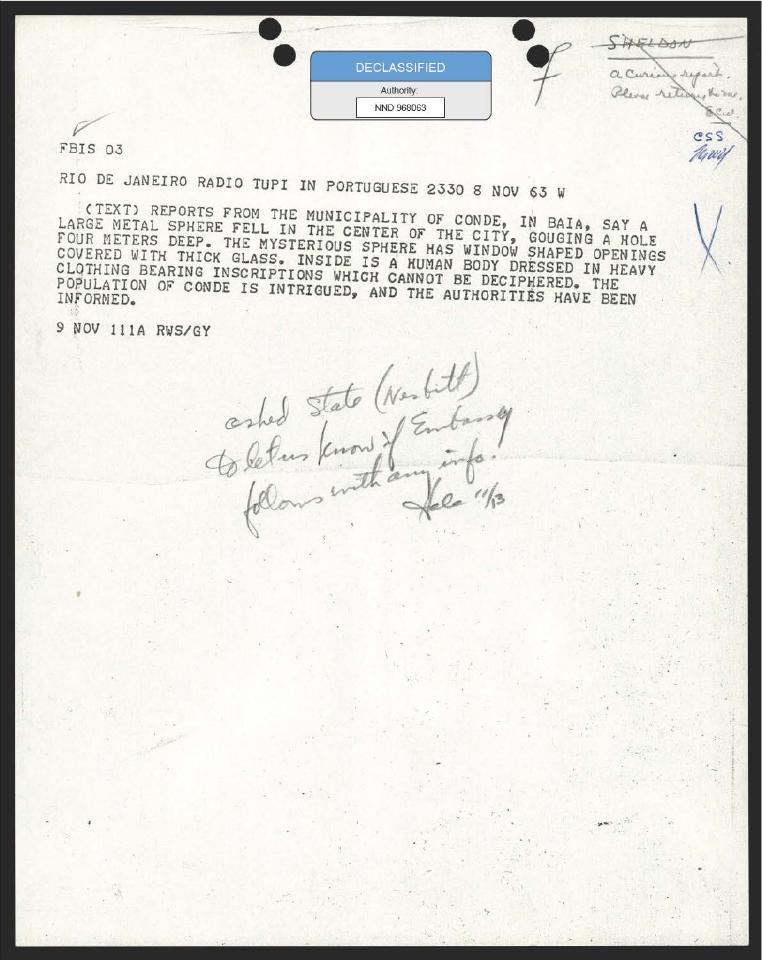
Bahia inquiry
What it shows: The government paper trail begins with a spectacular crash-and-occupant report and requests verification.
The limit: Official attention records the allegation; later correspondence fails to corroborate its central claims.
What the record supports
Release 5 documents multiple triangle reports, serious historical analysis of two films, and a verifiable chain showing officials investigate and downgrade an extraordinary press account.
What it does not establish
Similar witness language does not prove a common craft. A rendering is not a photograph, a tentative film assessment is not final identification, and an initial government inquiry does not validate the rumor that triggered it.