A video-heavy release
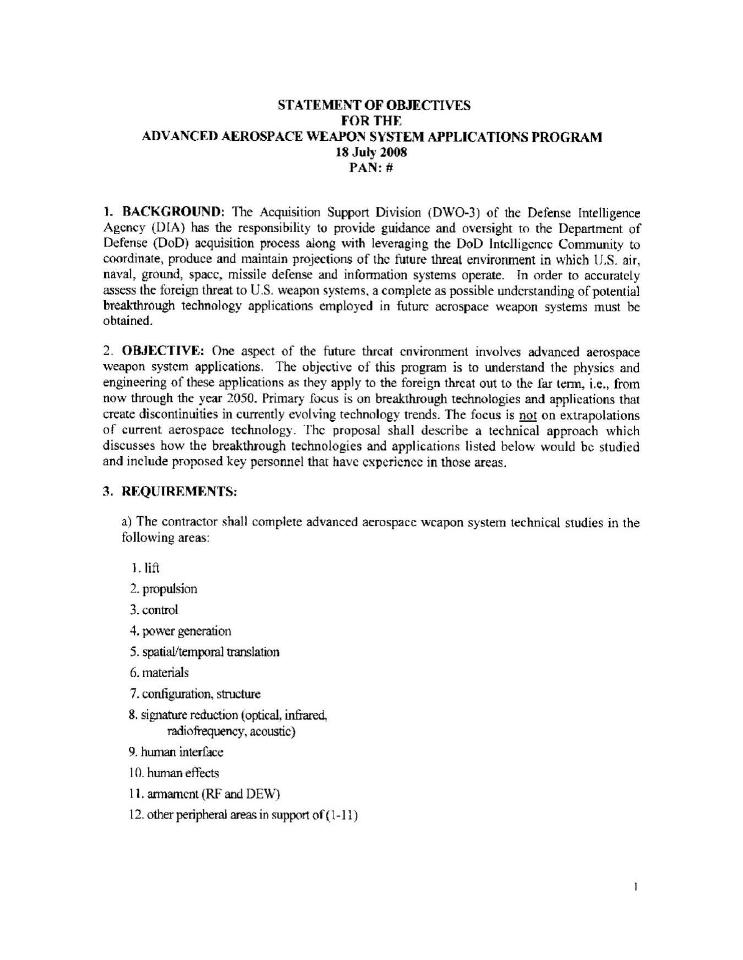
The second PURSUE drop arrived May 22, 2026 with 64 records. Fifty-one were videos, joined by six PDFs and seven audio files. On paper, that made Release 2 the archive’s moving-image event. In practice, it became a lesson in why footage without dependable context can generate confidence faster than knowledge.
Many clips came from military sensors and carried uploader-defined titles. Those labels are useful leads, not findings. They can preserve what a file was called on a network while leaving acquisition history incomplete. AARO’s descriptions repeatedly distinguish the visible behavior of contrast on a screen from a factual determination about the object beyond the sensor.
The Lake Huron clip is the provenance test
The most consequential example is a 46-second video titled by its uploader as an F-16 shootdown over Lake Huron on February 12, 2023. The footage appears to show one area of contrast meeting another, followed by radial fragmentation. That makes the file important. The same catalog entry says many records in the responsive collection lacked a substantiated chain of custody and describes the attribution as likely, not certain.
Both facts belong in the headline-sized version. A dramatic image with an uncertain documentary path is not worthless; it is evidence with a ceiling. The ceiling cannot be removed by replaying it more slowly.
The quieter files may age better
Release 2 also contained the 116-page Sandia file documenting 209 reports of green orbs, discs, and fireballs from 1948 to 1950. Unlike a brief clip, that collection reveals how reports accumulated, what physical traces investigators considered, and how cases moved into Project Grudge. It does not settle the cause, but it exposes the machinery of inquiry.
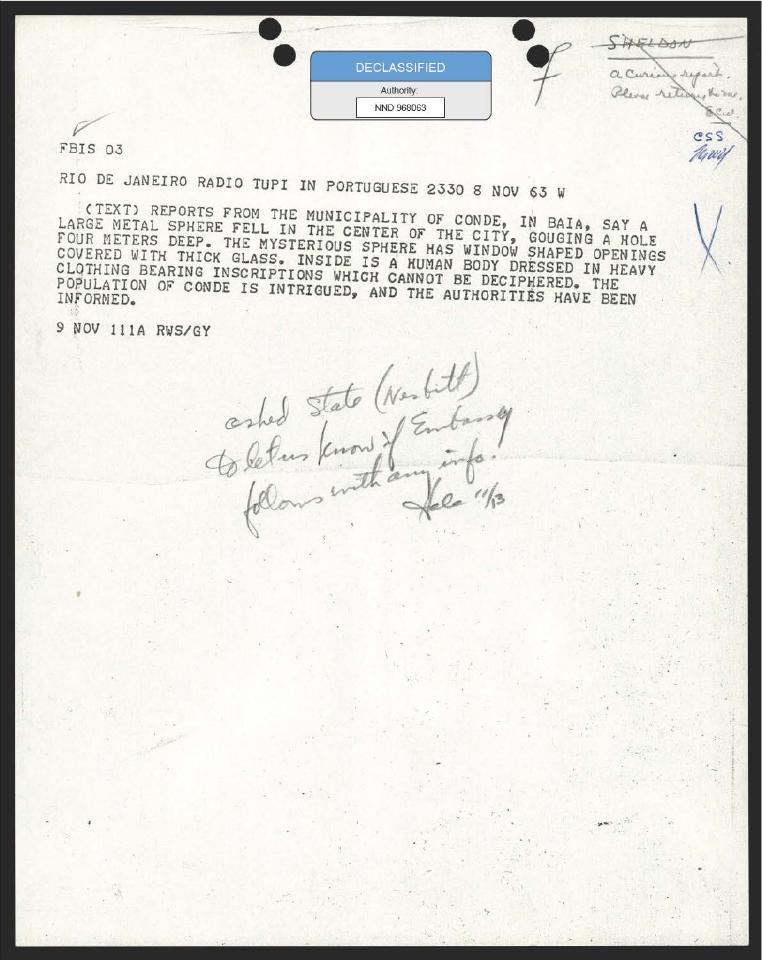
A CIA report from the Soviet Union preserves a source’s 1973 account of a bright green luminous phenomenon with concentric circles and no sound. NASA audio from Mercury missions adds another evidence type: contemporaneous speech, with all the immediacy and ambiguity that implies. Together they show why “more video” was not necessarily the release’s same thing as “more resolution.”
The useful question for every clip is therefore not simply whether it looks odd. It is whether the package lets another analyst reconstruct the observation: original file, timestamp, sensor state, platform motion, range constraints, and corroborating records. Release 2 supplied many things to watch. It also made missing context impossible to ignore.
The most important record was not the easiest to watch
Release 2’s senior intelligence-official narrative may be more consequential than any isolated clip. The first-person account describes a helicopter crew, ground teams using infrared, radar direction from an operations center, and fighter aircraft in the same operating area. It includes close-range glowing orbs, an apparent split, and formations seen around aircraft. That is an unusually rich operational narrative.
Yet the public package still stops short of a reconstructable case. The narrative says other teams used sensors and that imagery existed, but it does not publish a synchronized event timeline tying every visual report to specific radar returns and original files. A high-ranking witness can improve contextual credibility. Rank does not turn estimates of distance or speed into measurements.
Release 2 gave provenance a starring role
The Lake Huron clip comes from a responsive set located on a classified network after congressional interest. AARO states that many items lacked substantiated chains of custody. That disclosure is not a footnote to ignore; it is part of the evidence. The clip’s uploader title may be correct, but the public record cannot yet demonstrate every part of it.
The Sandia investigation offers the opposite kind of value. Its large case file is not visually immediate, but it exposes collection, physical-trace claims, correspondence, and the path into Project Grudge. Long records make it possible to see hypotheses appear, change, and sometimes fail. More pages do not guarantee the right conclusion; they make the reasoning auditable.
Fifty-one videos did not produce fifty-one measurements
Most clips were created for operational purposes rather than scientific UAP study. The sensors may be sophisticated while the public excerpts remain stripped of range, calibration, full duration, or platform motion. As NASA later emphasized, even photographic or videographic evidence can remain inconclusive when metadata are absent.
Release 2 therefore improved access and variety but revealed a bottleneck. The public no longer had only witness stories; it had many things to watch. It still lacked the supporting data that would allow independent analysts to compute physical performance.
Evidence verdict: better operational context, incomplete linkage
The strongest Release 2 material approaches layer five: multiple observers, several sensor types, and an official operational setting. It remains below that threshold in public because the links among narrative, radar, infrared imagery, platform logs, and timestamps are asserted more often than demonstrated in one complete package.
The release would move sharply upward if the government published synchronized timelines, raw radar or derived tracks with calibration, original infrared files, platform positions, and the analysis that associates each item. Release 2 showed that government personnel can encounter genuinely unresolved events. It did not make the extraordinary performance claims independently testable.
Evidence on the page
What the released material actually shows
Open each source to inspect the complete record. The caption separates the useful fact from the limit that keeps it from carrying more weight.
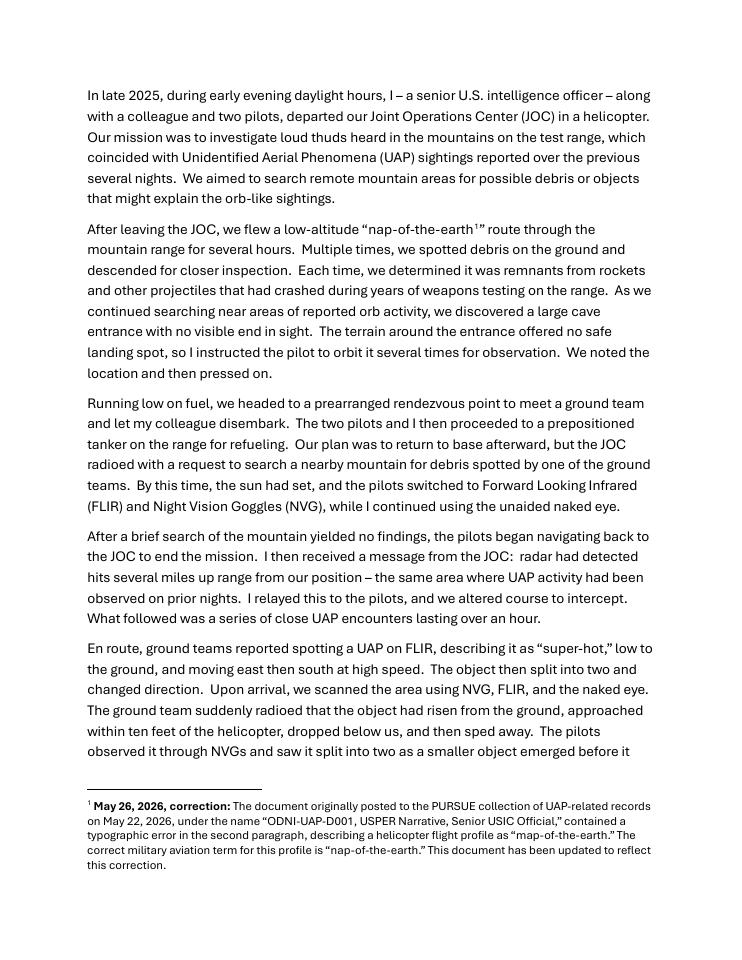
Senior intelligence-official narrative
What it shows: A first-hand operational account links helicopter observers, ground teams, infrared, radar direction, and fighter activity.
The limit: The released package does not provide one synchronized timeline tying every report and sensor hit to the same object.

Lake Huron infrared clip
What it shows: A military-looking sequence appears to show a kinetic interaction and fragmentation.
The limit: The uploader-defined title is more specific than the public chain of custody can authenticate.
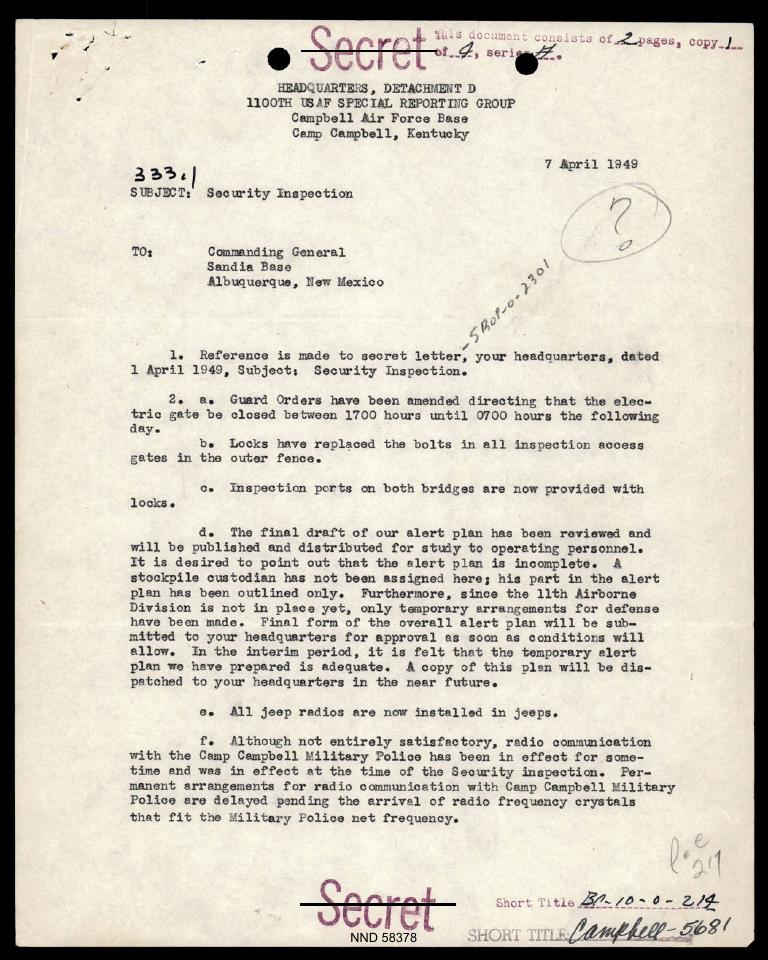
The Sandia investigation file
What it shows: A long historical record preserves hundreds of reports and the machinery of an official inquiry.
The limit: Volume documents sustained attention but does not make every report independent or resolved.
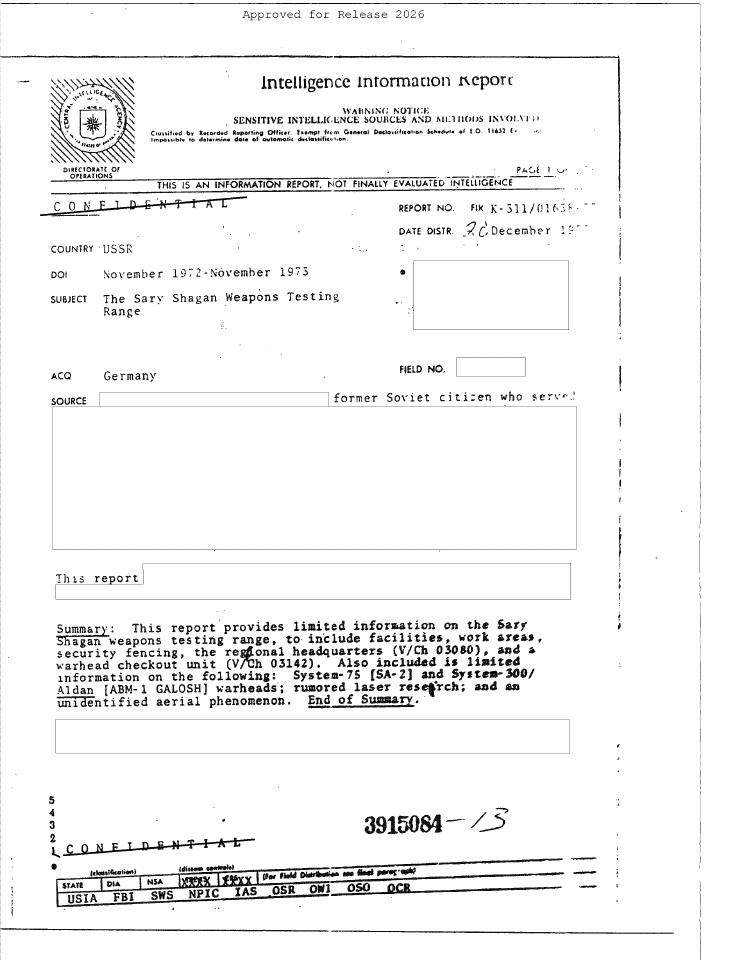
Soviet luminous-phenomenon report
What it shows: A field report preserves a source’s detailed account of a silent green phenomenon with concentric structure.
The limit: It remains a reported observation without recoverable instrument data in the released file.
Mercury mission audio
What it shows: Contemporaneous astronaut speech captures a light or object before later retelling can reshape it.
The limit: Audio supplies immediacy but not distance, scale, or a synchronized image.
What the record supports
Release 2 substantially expanded the public media collection and preserved several historically important records, including the Lake Huron clip, Sandia investigations, astronaut audio, and a CIA field report.
What it does not establish
An uploader title is not a verified chain of custody. Sensor footage cannot by itself supply missing range, scale, platform motion, or object identity, and a large historical case file can document concern without resolving cause.