One hundred fifty-eight files, and no single kind of evidence
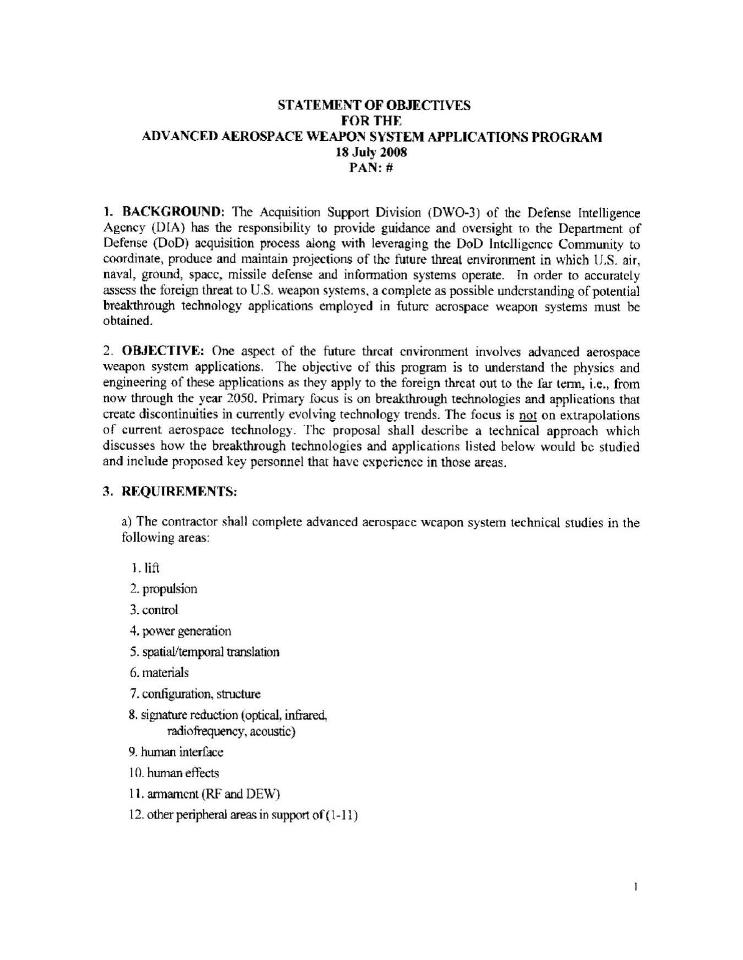
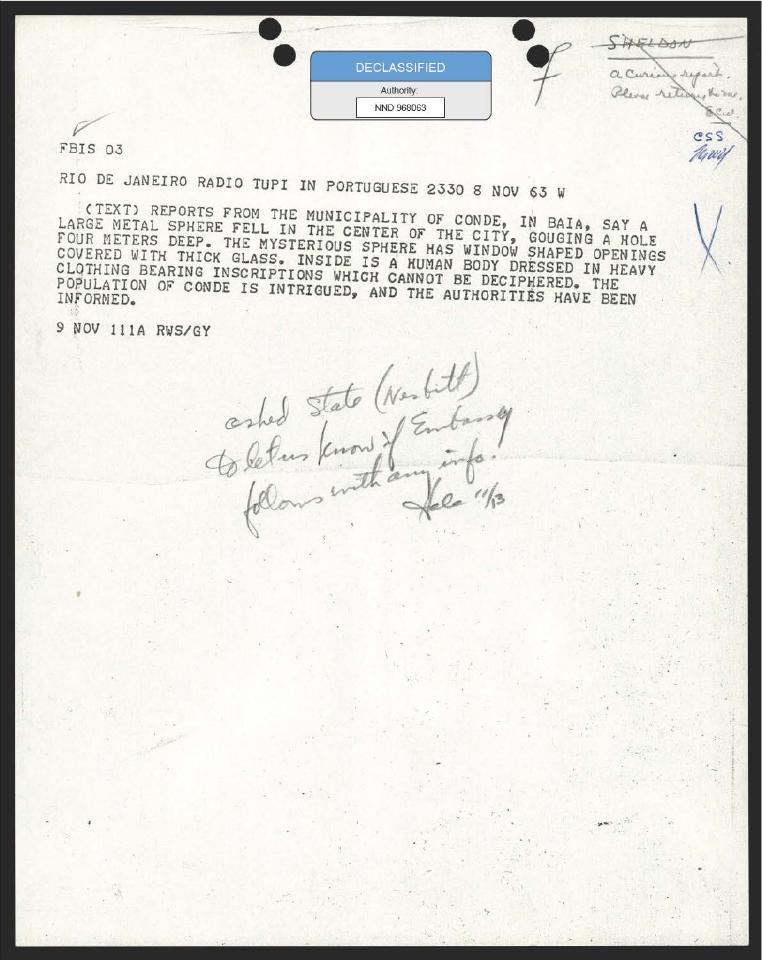
PURSUE opened on May 8, 2026 with 158 records: 116 PDFs, 27 videos, 14 images, and one audio file. That count sounds orderly. The material was anything but. Historical FBI and military files sat beside recent mission reports, astronaut debriefings, infrared clips, and photographs. The first lesson of the archive arrived before any individual mystery: a database row can make radically different evidence look equivalent.
A formal mission report has a chain of military handling but may contain only a short subjective description. A cockpit or infrared video can look more objective while withholding range, sensor mode, platform motion, or provenance. A decades-old transcript may preserve context beautifully but describe an observation that was never instrumented. Release 1 made comparison possible; it did not make every record equally complete.
The Apollo material deserved attention—and restraint
The Apollo 11 technical debriefing was an obvious headline record. Buzz Aldrin discussed a sizeable object seen during the flight to the Moon, flashes noticed in darkness, and a bright terrestrial light. Yet those passages describe different events. The crew considered spacecraft hardware for the external object, later missions studied closed-eye light flashes as a radiation effect, and the bright Earth light was reconsidered as reflected sunlight. Interesting, yes. One unified Apollo encounter, no.
Gemini 7 adds another useful example. Its “bogey” report appears beside a large field of particles. The vocabulary is dramatic to modern ears, but the surrounding discussion matters more than the isolated word. AURA’s rule is simple: never let the most exciting noun outrun the rest of the paragraph.
Modern reports showed the opposite problem
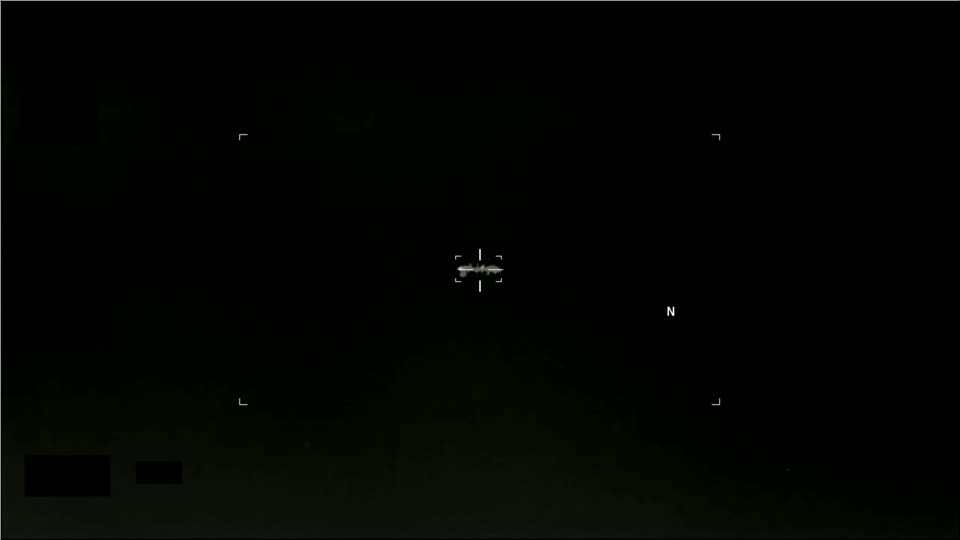
Several recent military records were concise enough to be almost austere. One Arabian Gulf mission report describes a line of dots with a trailing dot and carefully warns that reporter language is subjective. A 2026 Army infrared video tracks two areas of contrast, but its public description explicitly says it offers no analytic conclusion. The camera follows something; the released record does not tell an outside reader what that something was.
This is the most useful way to read the first drop: not as 158 answers, but as 158 examples of what survives government collection. Sometimes that is a detailed debrief. Sometimes it is a clip with missing context. Sometimes it is a historical file whose greatest value is showing how officials reasoned at the time.
Four records that explain the first release
The Apollo 11 debrief is the best place to see why Release 1 needs patient reading. The same excerpt contains a sizeable object seen through a monocular, flashes observed with the cabin dark, and a bright light seen on the return trip. Those are not three descriptions of one thing. The crew discussed discarded launch hardware as a candidate for the external object; later missions studied the flashes as interactions between energetic particles and the visual system; and the “laser” description was tentative. The record matters because it captures expert observers thinking in real time, including their uncertainty. It becomes misleading only when three separate observations are fused into a single encounter.
The Gemini 7 transcript creates a similar trap through vocabulary. “Bogey” now sounds like a deliberate craft, but the conversation also describes a large field of particles and tries to establish where the observed material sits relative to the spacecraft. Mission shorthand is not a laboratory result. The transcript is strong evidence that the crew saw something it could not immediately label; it is weak evidence for distance, size, or origin because none of those quantities was measured.
The modern files reverse the problem. The Arabian Gulf report and the Army infrared clip come from military systems and therefore feel more technical, but the public versions do not release the complete sensor state. A line of dots can be faithfully recorded while range remains unknown. Two infrared contrasts can be tracked while autofocus, digital processing, and platform motion remain unmodeled. “Military sensor” raises the possibility of useful measurements; it does not guarantee those measurements are present in the released package.
What changed because Release 1 existed
Before PURSUE, many of these materials were scattered across agency sites, archival holdings, and enthusiast collections. Release 1’s real gain was common provenance: a public government catalog connected record identifiers, descriptions, files, and a release date. That makes auditing easier. It also exposes where a catalog description summarizes more than the underlying file can independently prove.
On UFOInform’s auditability ladder, Release 1 reached layer four for its best items: identifiable official records, some of them instrumented, with enough context to know who held them and why. It did not reach layer six, where an outside analyst receives original data, complete metadata, calibration, and a chain sufficient to reproduce an official conclusion. The release widened access more than it deepened measurement.
Evidence verdict: a foundation, not a reveal
The strongest conclusion is institutional, not extraterrestrial. The government assembled a genuine cross-agency record of reports, media, and historical investigation, and some observations remained unidentified in the public files. The collection also demonstrates why “unidentified” survives: old testimony often lacks measurement, while modern media often arrives without the operational context needed to interpret it.
What would move the release upward is not another compilation of compelling moments. It would be case-level packages linking original files to timestamps, platform and sensor specifications, range constraints, contemporaneous logs, analyst work, and final dispositions. Release 1 gave the public the map. It rarely gave the full laboratory notebook.
Evidence on the page
What the released material actually shows
Open each source to inspect the complete record. The caption separates the useful fact from the limit that keeps it from carrying more weight.
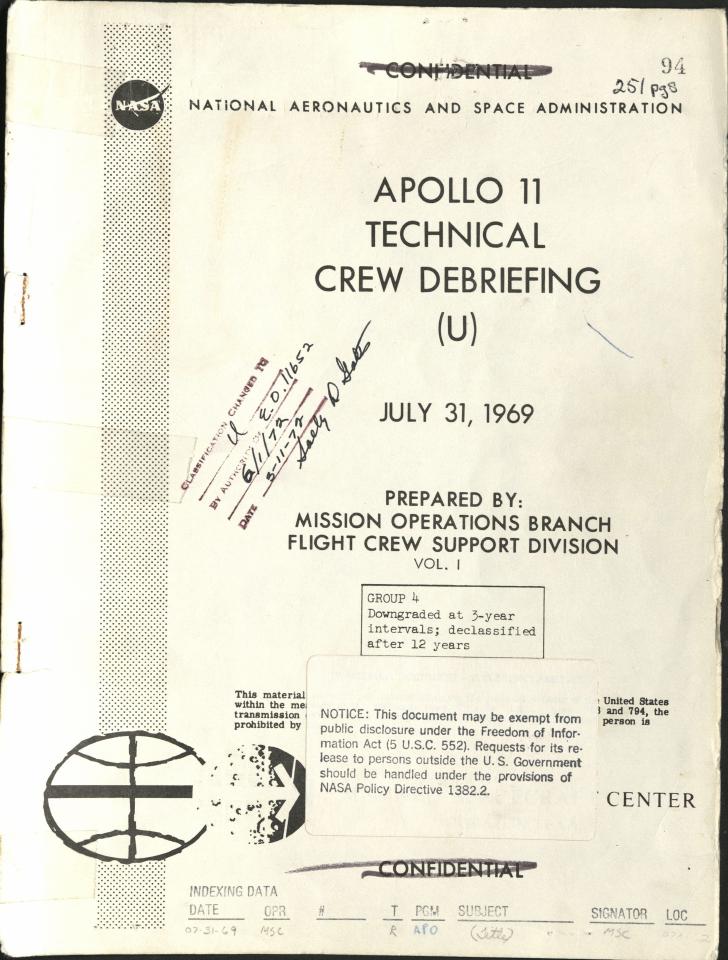
Apollo 11 technical debrief
What it shows: The crew discusses three distinct observations and considers ordinary spacecraft or optical contexts inside the original mission debrief.
The limit: The excerpt supplies no independent ranging or imagery for the sizeable external object, and the three events should not be combined.
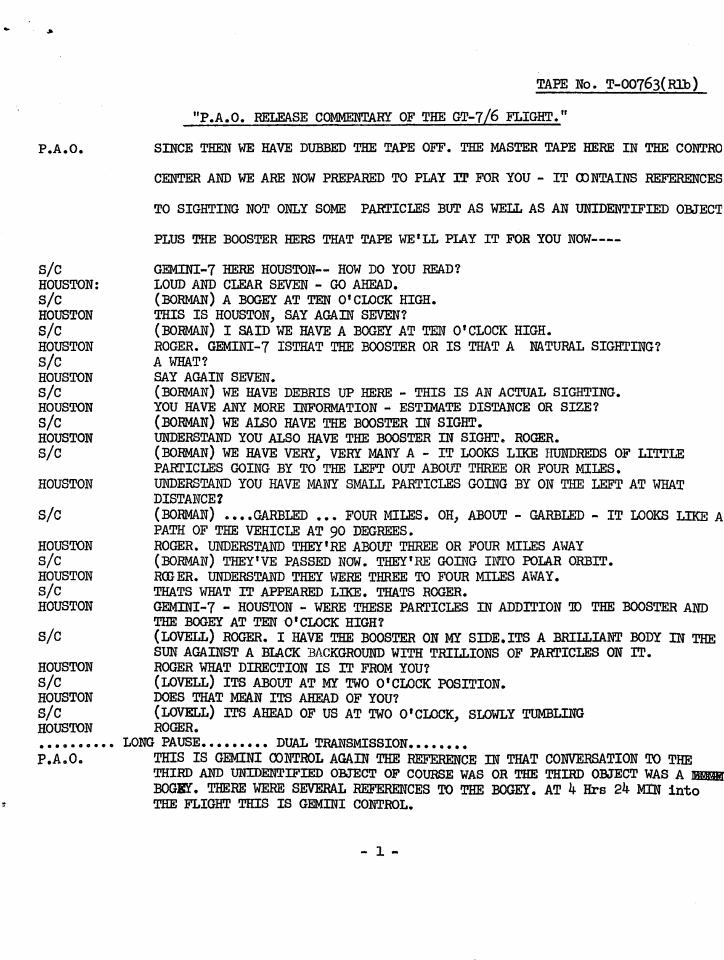
Gemini 7 “bogey” exchange
What it shows: Contemporaneous mission language preserves an object report beside a large field of particles.
The limit: A radio transcript records perception and reasoning, not measured distance, scale, or composition.
Arabian Gulf mission report
What it shows: A military report preserves the crew’s description and explicitly warns that reporter language is subjective.
The limit: The public file does not provide the full sensor package needed to test the apparent geometry.
Army infrared recording
What it shows: The released video preserves two tracked infrared contrasts from a military platform.
The limit: The public description offers no analytic conclusion and the clip alone does not establish range or object identity.
What the record supports
Release 1 established a large, cross-agency public collection spanning early UFO investigations, human spaceflight, recent military reporting, and government-held media. Several records preserve observations that were unresolved in the released material.
What it does not establish
The size of the release does not make its records uniform, independent, or mutually corroborating. “Unresolved,” “unidentified,” and “visually striking” remain different claims, and none alone identifies an extraordinary cause.